
Canton Fair Adventure: Nine Days in China on Points
How my brother and I used Delta Miles, Singapore KrisFlyer, and IHG Points to get to the world's largest trade show
Programs Used: Delta SkyMiles · Singapore KrisFlyer · IHG One Rewards · Virgin Atlantic · Flying Blue · Alaska Miles
The Setup: Business and Points Don’t Have to Be Separate
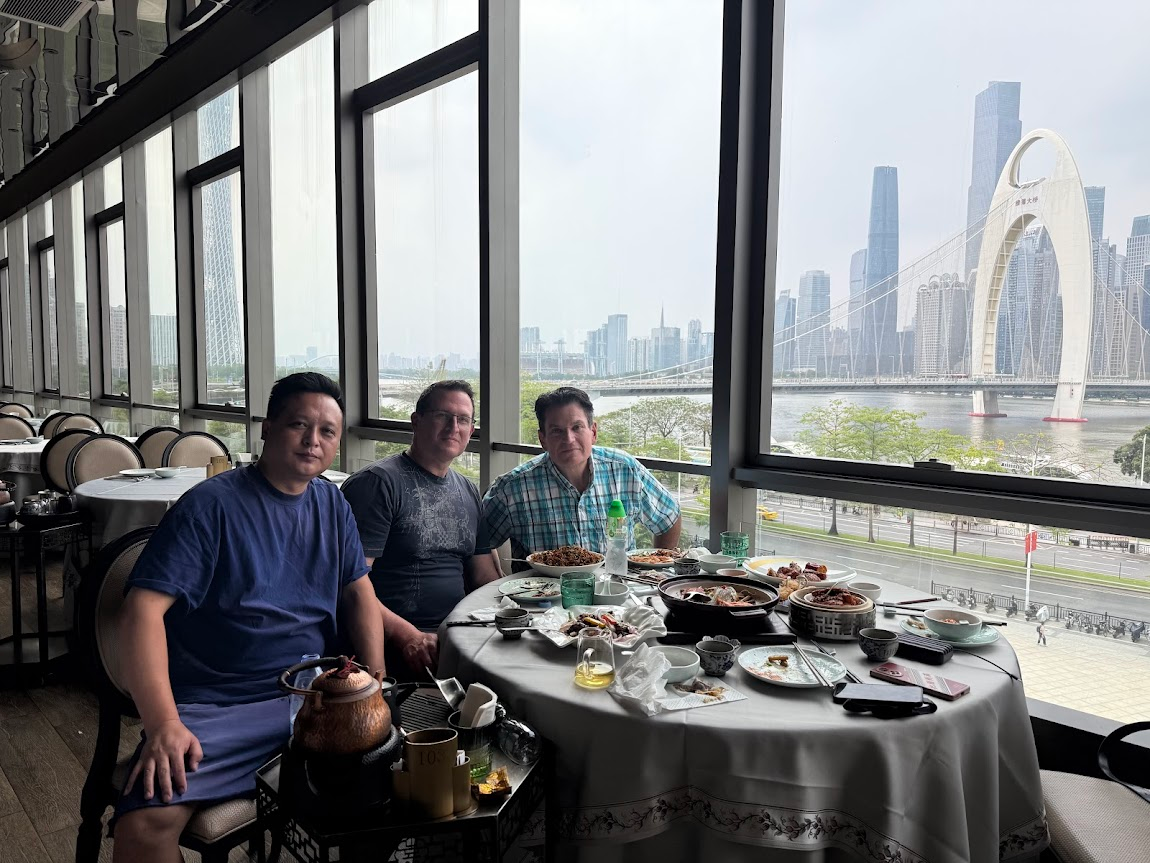
I have been running an ecommerce business for over 20 years. My brother Jon was recently starting his own ecommerce apparel line, and when he suggested a trip to the Canton Fair I was genuinely excited. I had a trip to China planned for May 2020 that was cancelled due to the pandemic, so this felt long overdue.
I also have a personal connection to China that goes back further than my business. I served as a missionary for the Church of Jesus Christ of Latter-day Saints in Taiwan from 1990 to 1992, where I lived and learned Mandarin Chinese. Over the years I had let the language slip, but this trip gave me a reason to push myself to reactivate it. I got back on Duolingo and started working through the basics again.
Jon had never been in an airport lounge or flown lie-flat business class. So in addition to spending nine days with my brother, this was a chance to show him firsthand what points and miles can do. To offset some of the costs, I encouraged him to sign up for the Amex Business Platinum card, which at the time was offering a 200,000 point sign-up bonus. Jon was concerned about the $895 annual fee. I told him we would get at least ten times that value out of the card on this trip alone.
Not every points-and-miles trip is a vacation. Some of the best redemptions I have made have been on business travel, where the flight and hotel are already necessary and the only question is how little cash you have to spend. This trip to China for the Canton Fair was exactly that kind of opportunity.
The routing took us from Salt Lake City to San Francisco, then Singapore, and finally into Guangzhou. On the way home we flew Guangzhou to Taipei, then Taipei to Seattle on Starlux Airlines, and finally Seattle back to Salt Lake City on Delta. Nine days total, and nearly every flight and hotel night was covered by points. The routing was not the most direct available, but I would much rather spend a few extra hours on a lie-flat seat than fly economy on a trip of this length.
The Flights Out: Delta, Singapore KrisFlyer, and a Lounge Worth the Detour
We flew Delta from Salt Lake City to San Francisco on Virgin Atlantic miles at 10,300 points plus $5.60 each. The layover in San Francisco was just under three hours, which gave us enough time to get to the international terminal comfortably. Because we were traveling in business class we had access to the United Airlines Polaris Lounge in San Francisco. It was impressive : a full buffet if you were in a hurry, or a proper seated dinner from a menu if you had time. We went with the buffet and did not regret it. If you have not been to the Polaris Lounge at SFO, it is one of the better airport lounge experiences in the United States.
The long haul from San Francisco to Singapore was on Singapore Airlines, booked in business class using Singapore KrisFlyer miles at 107,000 points. The cash rate for this flight was around $8,000. That single redemption is the clearest illustration of what the points-and-miles hobby actually makes possible. Singapore Airlines business class is consistently ranked among the best in the industry, and KrisFlyer miles can be transferred from American Express Membership Rewards at a 1:1 ratio. The flight is roughly 17 hours and having a lie-flat seat makes an enormous difference on a crossing that long. I had flown Singapore Airlines before on a trip to Australia, so I knew what to expect. Watching Jon experience a bed in the sky for the first time was one of the highlights of the whole trip.
Pro Tip: Singapore KrisFlyer miles are one of the best currencies for booking Singapore Airlines business class, and Amex Membership Rewards transfers to KrisFlyer at a 1:1 ratio. If you have a long-haul trip to Asia on the horizon, start accumulating Amex points now.
From Singapore we connected to Guangzhou Baiyun International Airport, arriving midday with plenty of time to check in before our first dinner.
One thing I wish someone had told us before we arrived: download WeChat before you land. Our taxi driver was quite unhappy when I tried to pay with a credit card, and my cell service was not reliable enough to download and set up the app on the spot. I eventually handed him US cash and he reluctantly agreed. WeChat Pay is how almost everything is paid for in China. Get it set up before you board.
The Hotel: InterContinental Guangzhou Exhibition Center
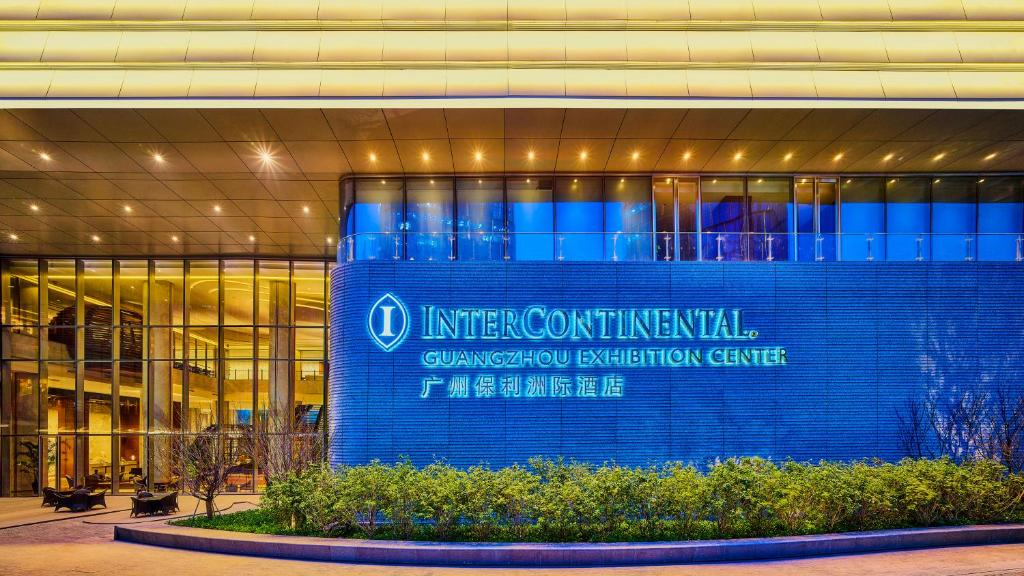
The cash rate at the InterContinental Guangzhou Exhibition Center was $343 per night. Jon and I shared a room with two queen beds for five nights, which would have cost over $1,700 paid in cash. The IHG points rate was 62,000 points per night, but IHG has a fourth-night-free benefit when you book three consecutive nights, which we took advantage of. I also applied a free night certificate to cover the fifth night. The entire stay was covered without cash.
The location is ideal for anyone attending the Canton Fair. The hotel sits right on the Pearl River in the Haizhu District and is one of the closest major hotels to the fair complex. The staff speaks English, the property is well-maintained, and not spending an hour in traffic each morning before the fair opens is worth a lot when you are trying to cover a venue this large.
I do want to share one experience at this hotel that I think every points traveler can learn from. When I checked in I expected Club InterContinental lounge access as an IHG Diamond member. The front desk politely told me the lounge was invite-only and that my status did not automatically qualify me. I found this puzzling, but they explained that in China, certain invitation-only tiers such as IHG Royal Ambassador receive complimentary Club InterContinental access at participating properties, while regular Diamond status does not guarantee it. I had not encountered this before.
About 24 hours after check-in I received the standard mid-stay satisfaction email. Instead of ignoring it, I replied politely and simply asked whether access to the Club InterContinental might be possible for the remainder of my stay. They said yes. That was it. One email, one ask, and we had lounge access for the rest of the trip. I have a line I use often in situations like this: “What are the chances?” If you never ask, the answer is always no. This was a good reminder of that.
Pro Tip: IHG Diamond status does not automatically guarantee Club lounge access at InterContinental properties in China. If you are denied at check-in, do not assume the answer is final. Wait for the mid-stay survey email and politely request access. The worst they can say is no.
The Canton Fair: What It Is and Why It Matters
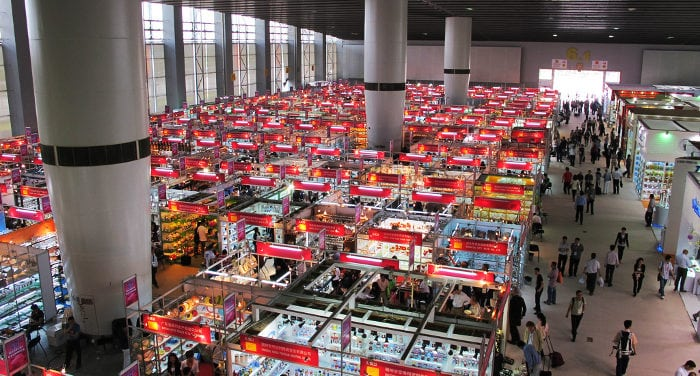
The Canton Fair : officially the China Import and Export Fair : is the largest trade show in the world. It has been running since 1957 and takes place twice a year in Guangzhou, with each session split into three phases covering different product categories. Phase 3, which is what Jon and I attended, focuses on consumer goods, gifts, home goods, and textiles.
The fair is held at the China Import and Export Fair Complex, one of the largest exhibition spaces on earth. The scale is genuinely hard to describe. It covers over 12 million square feet across multiple buildings and floors. Jon and I averaged over 25,000 steps a day just moving through it. Serious buyers can spend the full five days and still not see everything. One of the most important things I would tell anyone going for the first time: know specifically what you are looking for before you arrive, or the sheer volume of options will become overwhelming very quickly.
For our trip, Jon had specific vendors he wanted to visit, including his tie vendor and his shirt supplier. We also did factory tours, which is where the real sourcing work happens and where you learn things about product quality and manufacturing that a trade show booth simply cannot tell you.
The Factory Tours
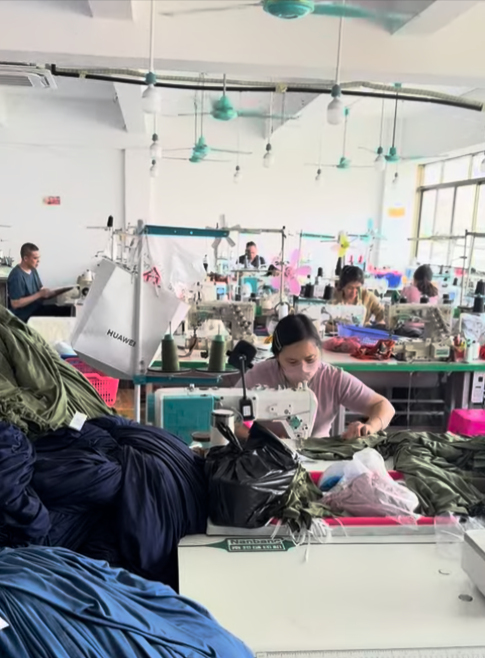
On Friday we did two factory tours back to back. The first was a glasses factory in the Huadu District. Seeing the manufacturing process firsthand changes how you think about products and pricing. You understand what actually costs money to produce and what is margin. That context is valuable in every negotiation that follows.
The second was a dress factory in the BaiYun District. Factory tours are not glamorous : a lot of walking through industrial buildings, asking detailed questions, and taking notes : but the information you come away with is irreplaceable. If you are sourcing products from China and skipping the factory visits, you are at a real disadvantage.
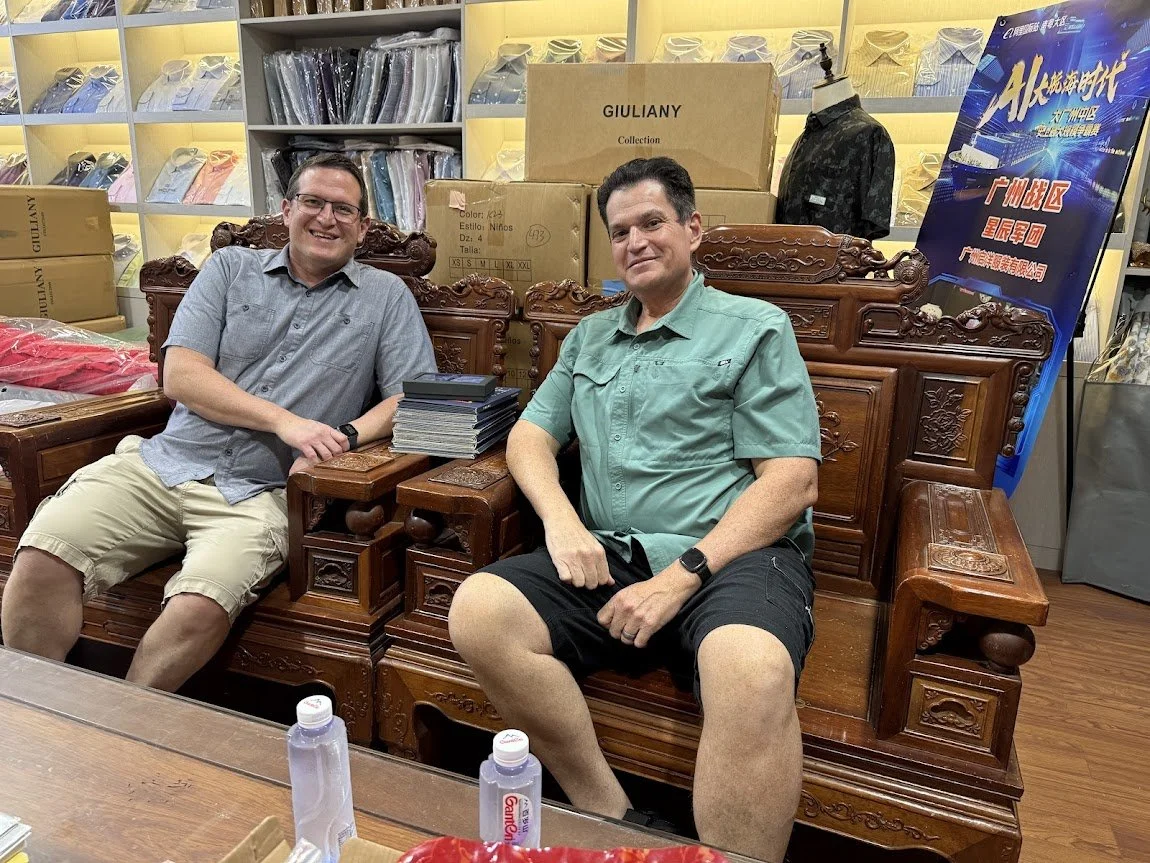
On Monday we visited a showroom to preview new shirt samples in person. Evaluating fabric weight, stitching quality, and fit before placing an order is exactly why making the trip in person is worth it. You simply cannot do that work remotely.
The Dinners: Accepting Every Invitation
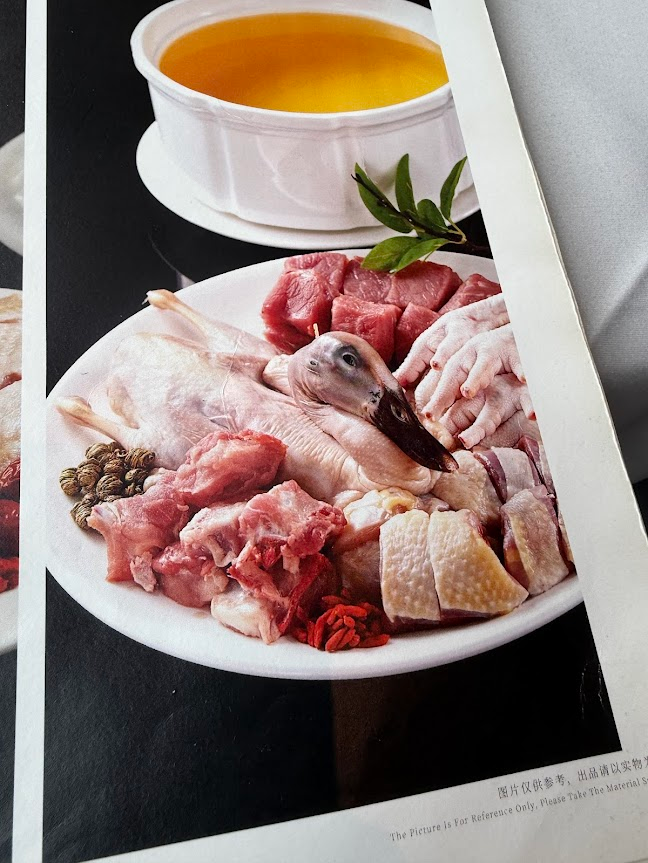
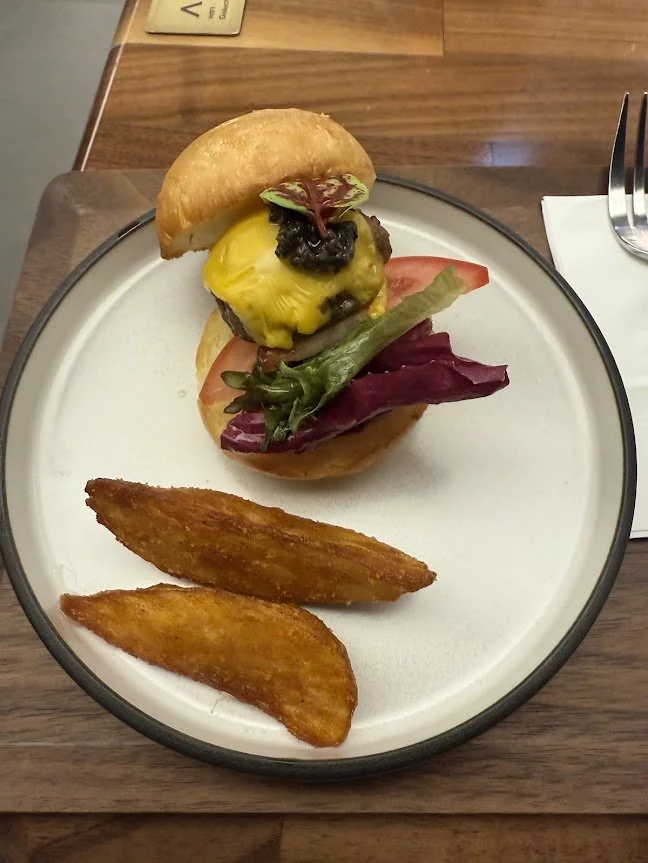
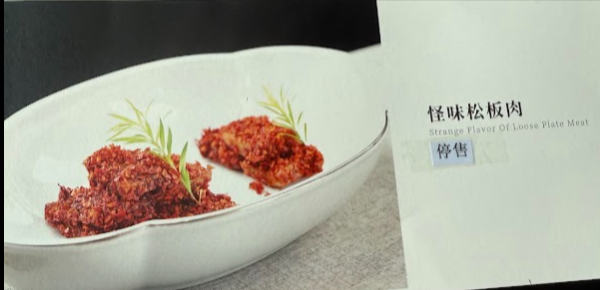
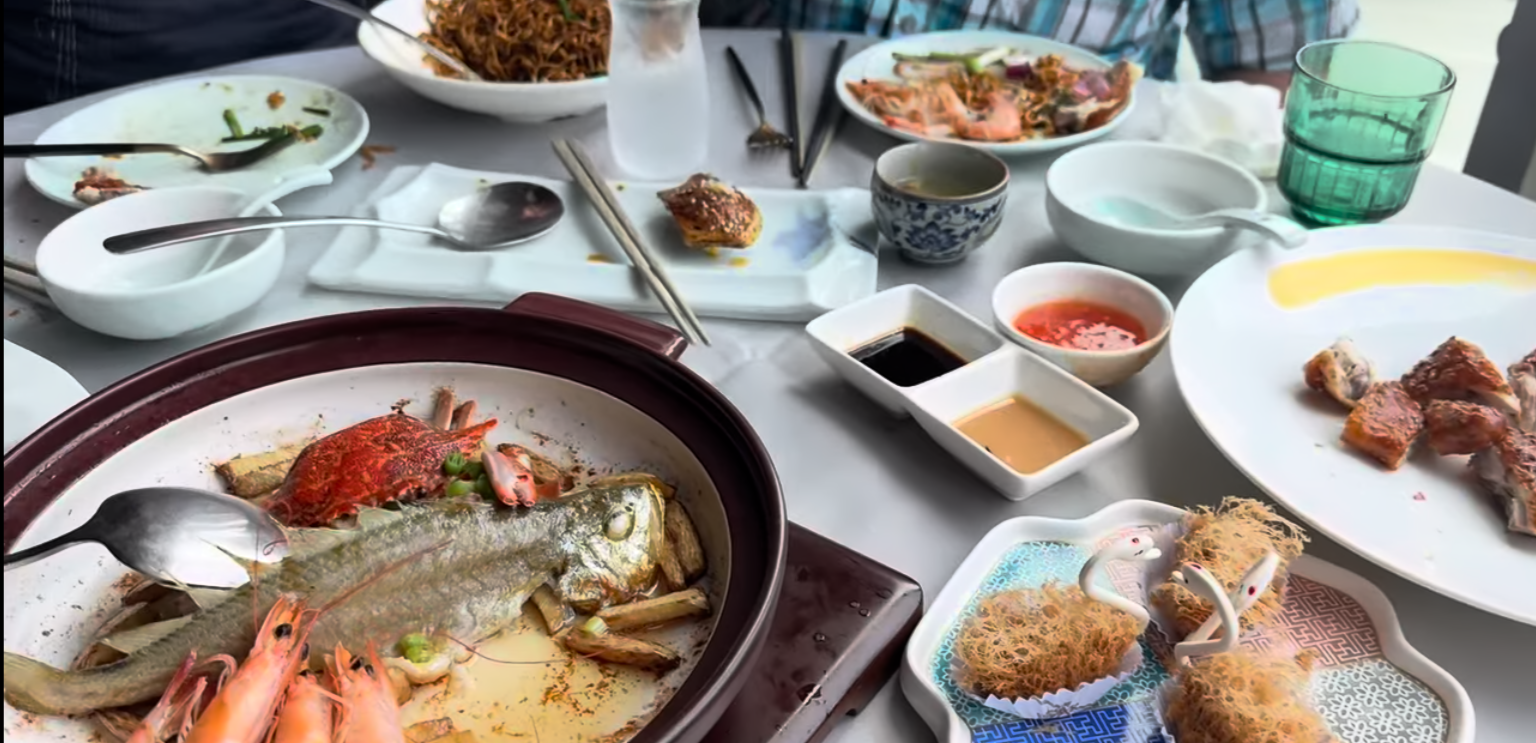
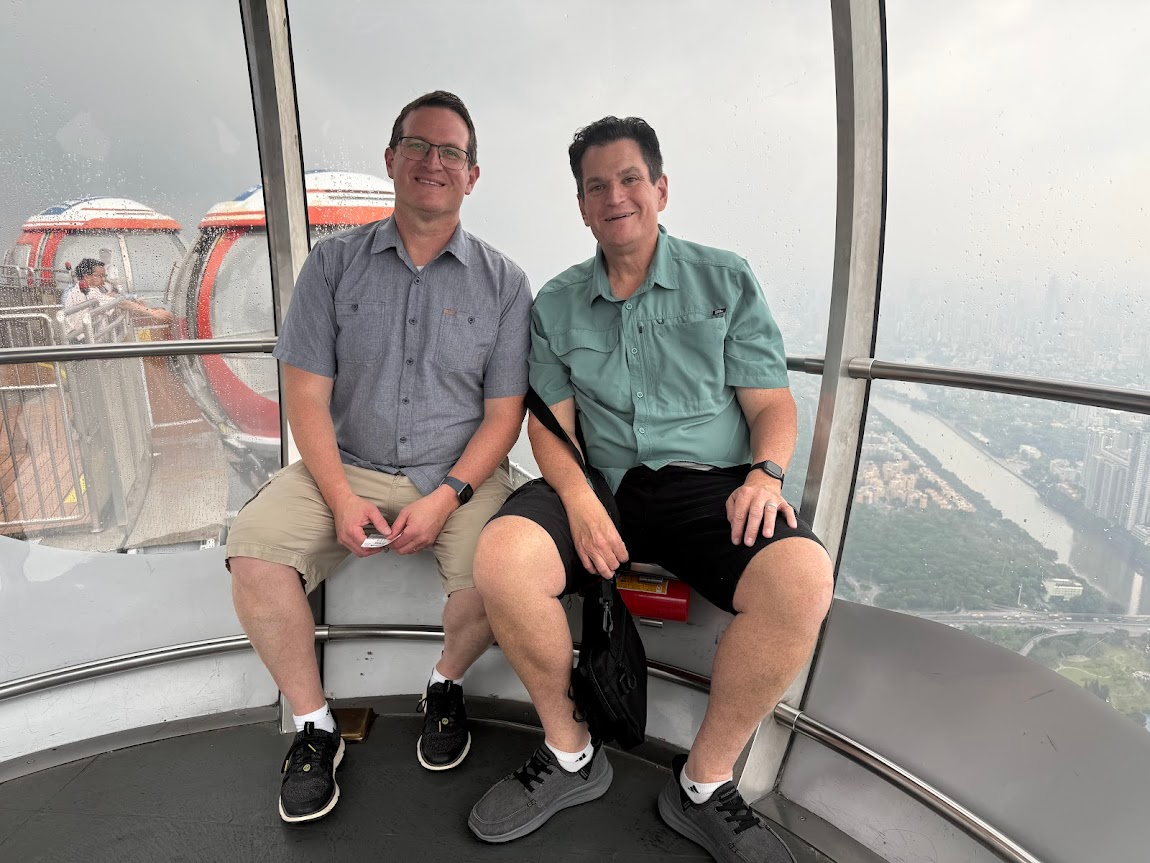
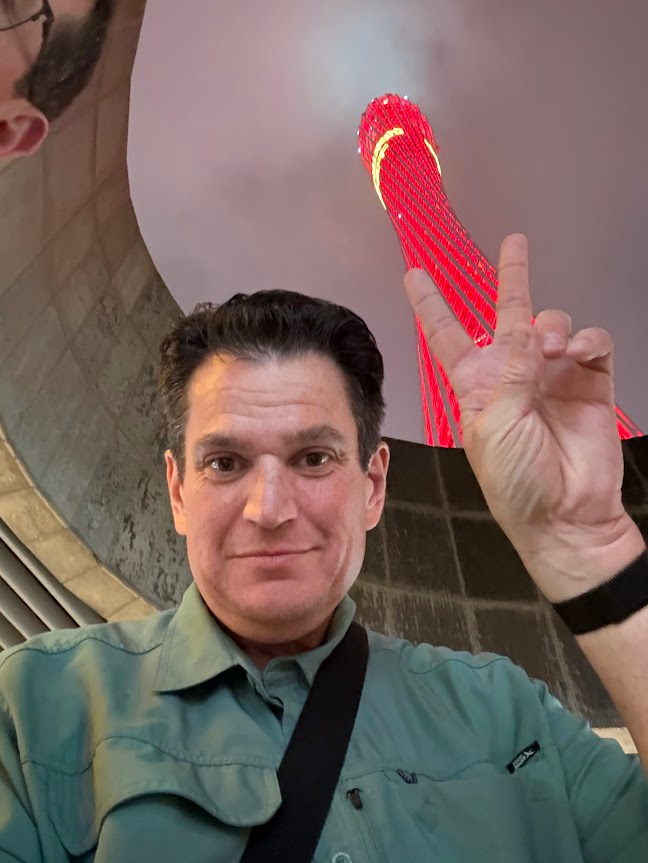
One of the things that does not make it into most China sourcing guides is how central meals are to doing business there. Our first evening in Guangzhou we had dinner with one of my suppliers, who had arranged our airport pickup and handled several logistics for the trip. On Monday evening we had dinner near Canton Tower, one of the signature landmarks of the city and worth seeing at night when it is lit up.
Jon and I will both be honest: neither of us particularly liked the food in China. But we accepted every dinner invitation without hesitation, because these meals are not really about the food. They are how relationships are built and maintained. Chinese hospitality is genuinely impressive, and showing up is the minimum. If you are making a sourcing trip to Guangzhou, put the dinners on your calendar and treat them like the business meetings they are.
Sunday: Church in Guangzhou
On Sunday morning we attended the Guangzhou 1st Branch of the Church of Jesus Christ of Latter-day Saints, an English-speaking congregation that meets at the La Perle International Hotel in the Tianhe District. Sacrament meeting starts at 10:00 AM. If you are a member traveling to Guangzhou, that is the branch to find.
One thing that struck me: no native Chinese citizens could legally attend this meeting. Chinese law prohibits it. The congregation was entirely made up of foreigners : Americans, Australians, South Americans, Singaporeans : and the whole thing was conducted in English. We had to bring our foreign passports. It was a genuinely unusual and memorable experience.
The Return: Starlux Airlines and the Star Wars Lounge
CAN → TPE (China Southern): 15,000 Flying Blue miles plus $64 each.
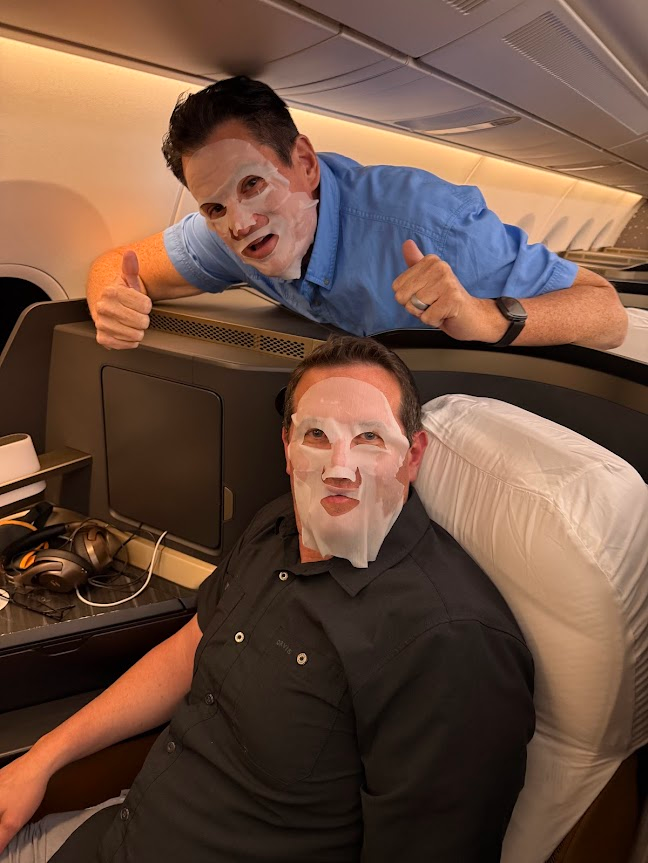

We flew China Southern from Guangzhou to Taipei on 15,000 Flying Blue miles plus $64 each. The layover in Taipei was eight hours, which in retrospect we could have used to leave the airport and do a quick city tour. Instead we stayed in the terminal, and I have no regrets about that decision because the Starlux lounge in Taipei is remarkable.
I have been to a lot of lounges. The Starlux lounge is better than any lounge I have visited in the United States. It has a Star Wars theme carried throughout : even the staff wear colorful aerospace-style jumpsuits. You order food from your table using a QR code. The whole experience was fun and genuinely elevated. If you have a long layover in Taipei, do not rush through it.
From Taipei we flew Starlux Airlines to Seattle, booked with Alaska miles at 75,000 points each. Starlux is a relatively new Taiwanese carrier that has built a strong reputation quickly, particularly in premium cabins. The final leg from Seattle back to Salt Lake City was covered with Flying Blue miles at 9,000 points plus $12.88 each.
Pro Tip: Starlux Airlines is worth knowing about if you travel between North America and Asia. It is a newer carrier with an excellent product and not yet as well-known as its competitors, which can mean better award availability. The Taipei lounge alone is worth building a layover around.
The Full Breakdown
Here is how the key costs were covered:
SLC → SFO (Delta): Virgin Atlantic miles : 10,300 pts + $5.60 each
SFO → SIN (Singapore Airlines, business class): Singapore KrisFlyer : 107,000 pts
SIN → CAN (Singapore Airlines): Singapore KrisFlyer : 34,000 pts each
InterContinental Guangzhou, 5 nights: IHG One Rewards points : 62,000 pts/night, 4th night free, 5th night on free night certificate
CAN → TPE (China Southern): Flying Blue : 15,000 pts + $64 each
TPE → SEA (Starlux Airlines): Alaska miles : 75,000 pts each
SEA → SLC (Delta): Flying Blue : 9,000 pts + $12.88 each
Why a Business Trip Is a Points Opportunity
There is a tendency in the points-and-miles world to think of redemptions as being reserved for vacations. The Canton Fair trip is a good reminder that business travel is often where the most valuable redemptions happen. The trip was necessary regardless of how it was paid for. The question was just whether we would pay tens of thousands of dollars in cash or use points we had already accumulated.
Getting to China from Salt Lake City is not simple. The routing involves multiple connections, a very long transoceanic flight, and a hotel in a city where navigation requires local knowledge. Having the right points in the right programs made all of that manageable at a fraction of the cash cost.
If you travel internationally for business and are not thinking about how to cover those flights and hotels with points, you are leaving significant value behind. The programs that work best for leisure : Singapore KrisFlyer, IHG One Rewards, Flying Blue, Alaska miles : work just as well when the reason for the trip is a trade show in Guangzhou.
Start with the trip you have to take. Then figure out how to pay for it with points. That is the whole game.
A few days into the trip I started grasping the language again. It is remarkable how the brain works : things I thought I had forgotten started coming back. I could say simple phrases and pick up fragments of conversations around me. It made me want to keep going. Maybe one day I will put that Mandarin to use as a volunteer guide at the Salt Lake City Olympics in 2034.
